
In 2009, I built a wearable device that vibrates to tell you which way is north. No screen, no map; just a persistent, subtle buzz against your skin pointing towards magnetic north at all times. The idea was simple: give a human being a sixth sense for direction.
The Concept
Homing pigeons have iron deposits in their beaks that let them sense magnetic fields. They always know where north is. I wanted to replicate that sense for humans using haptic feedback.

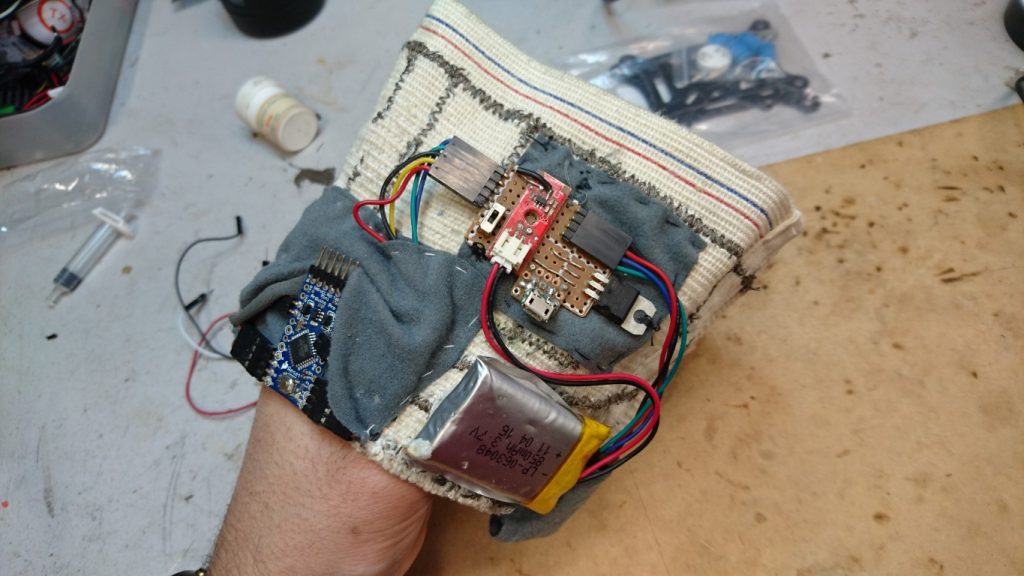
The band sits snugly around the wearer’s thigh. Eight vibrating motors are equally spaced around the inside, and a magnetometer (digital compass) sits on the outside, centred on the front of the thigh so it points forward. An Arduino reads the compass heading and activates whichever motor is currently facing north. As you turn, the vibration moves around the band. After a few days of wearing it, the idea is that your brain starts interpreting the signal subconsciously; you just “know” which way north is without thinking about it.

The Build
The electronics are straightforward: an Arduino Pro Mini, an HMC5883L magnetometer, a ULN2803 Darlington driver array for the motors, and an 850mAh LiPo battery. The tricky part was the mechanical assembly; sewing tiny vibration motors into stretchy fabric so they stay evenly spaced and do not bunch up when the band flexes.
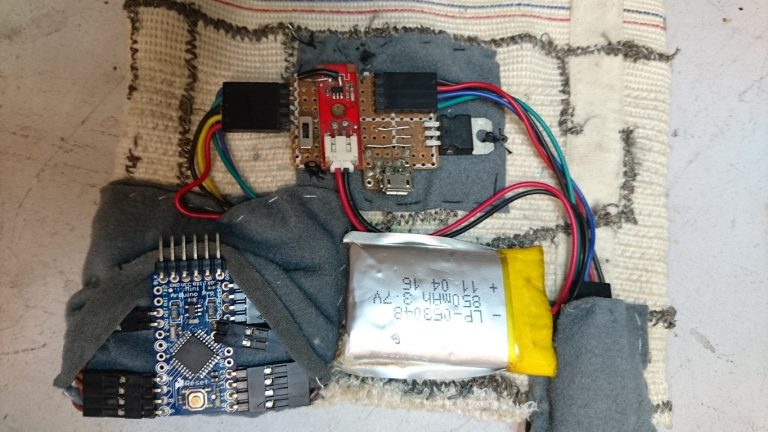
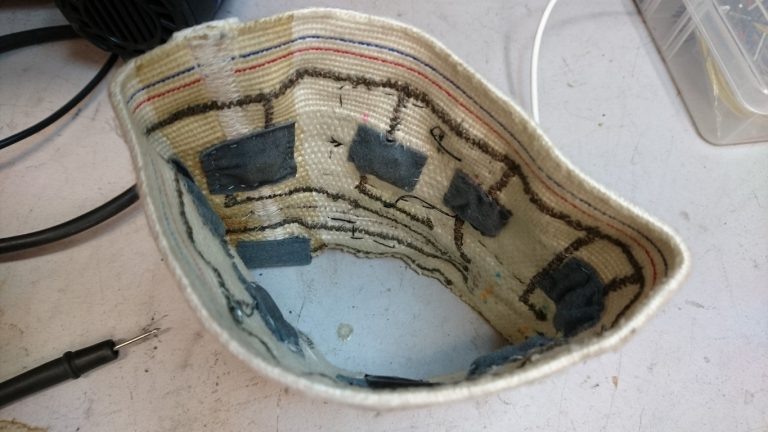
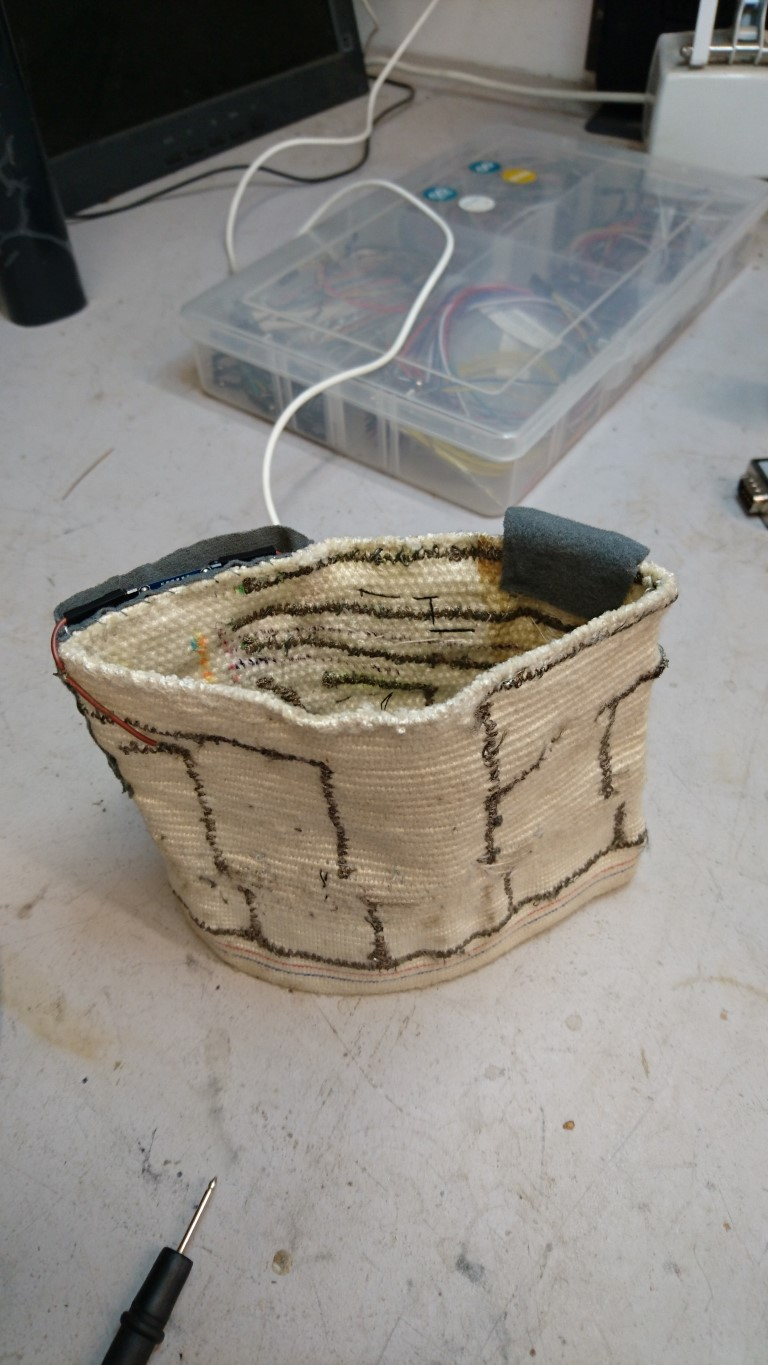
I revisited the project in 2016 after it had been sitting in a tub on my workshop shelf for years. The original build still worked, which says something about the simplicity of the design.
For the full build details, wiring diagrams, and code, see the original post.
Field Testing: Peru and the Galápagos
I did not just test this on the commute to work. I wore the band on my travels through Peru and the Galápagos Islands, navigating unfamiliar cities, jungle trails, and volcanic island terrain with a constant haptic awareness of magnetic north.
It worked exactly as hoped. After a few days of continuous wear, the vibrations faded from conscious awareness entirely. I stopped noticing the buzzing and just… knew where north was. Navigating without pulling out a phone became second nature. The hypothesis held: habituate the brain to a new sensory input and it eventually gets processed subconsciously.
It also drew some curious stares from fellow travellers. A mysterious vibrating thigh band is not the easiest thing to explain, doubly so in broken Spanish. And no, I did not dare wear it through airport security. Some conversations are best avoided.
What’s Next: A Modern Rebuild
The original proved the concept. Now I am seriously considering a v2 build, and the landscape has changed dramatically since 2009:
- BLE connectivity: Replace the Arduino with an nRF52840 or ESP32-S3 for Bluetooth Low Energy. A companion smartphone app could handle calibration, intensity settings, and even waypoint navigation (point towards a destination, not just north).
- Better IMUs: Modern 9-axis IMUs (like the BNO085) with built-in sensor fusion produce rock-solid heading data. No more fighting magnetometer calibration drift.
- Superior haptic drivers: DRV2605L-style haptic drivers with ERM and LRA motor support give much finer control over vibration intensity and patterns. Subtler, more informative feedback.
- Flex PCBs: Instead of hand-soldering flying leads to discrete motors, a thin flex PCB could wrap around the band with integrated motor pads. Smaller, lighter, far more reliable solder joints.
- AI-assisted firmware: The signal processing and motor control algorithms I wrestled with by hand in 2009 are now the kind of thing I can iterate on rapidly with AI-assisted development. Better filtering, smarter vibration patterns, faster prototyping of the firmware logic.
- Smaller power: A modern LiPo half the size with USB-C charging built into the band clasp. Multi-day runtime easily achievable.
The core idea holds up perfectly. The concept was proven on trails in South America over a decade ago. It is the execution that could benefit from 15 years of component miniaturisation, better tooling, and a lot more experience. Time to pull that tub off the shelf again.